Transform Your Space: 10 Professional Decorating Secrets for Every Room in Your Home
Transform Your Space: 10 Professional Decorating Secrets for Every Room in Your Home
Creating a home that feels both luxurious and livable is often perceived as an elusive art form reserved for elite interior designers. However, the difference between a cluttered room and a professionally styled space lies in the application of fundamental design principles. Whether you are moving into a new house or refreshing your current environment, understanding how to manipulate light, scale, and color can drastically alter your living experience. This guide unveils ten professional decorating secrets that will empower you to transform every room in your home with confidence and precision.
1. Master the 60-30-10 Color Rule
Color coordination is the foundation of any successful design. Professionals utilize the 60-30-10 rule to ensure balance. This means 60% of the room should be a dominant color (usually the walls), 30% is a secondary color (upholstery or rugs), and 10% is an accent color (pillows, artwork, or decor). This ratio creates a cohesive look that is visually stimulating without being overwhelming.
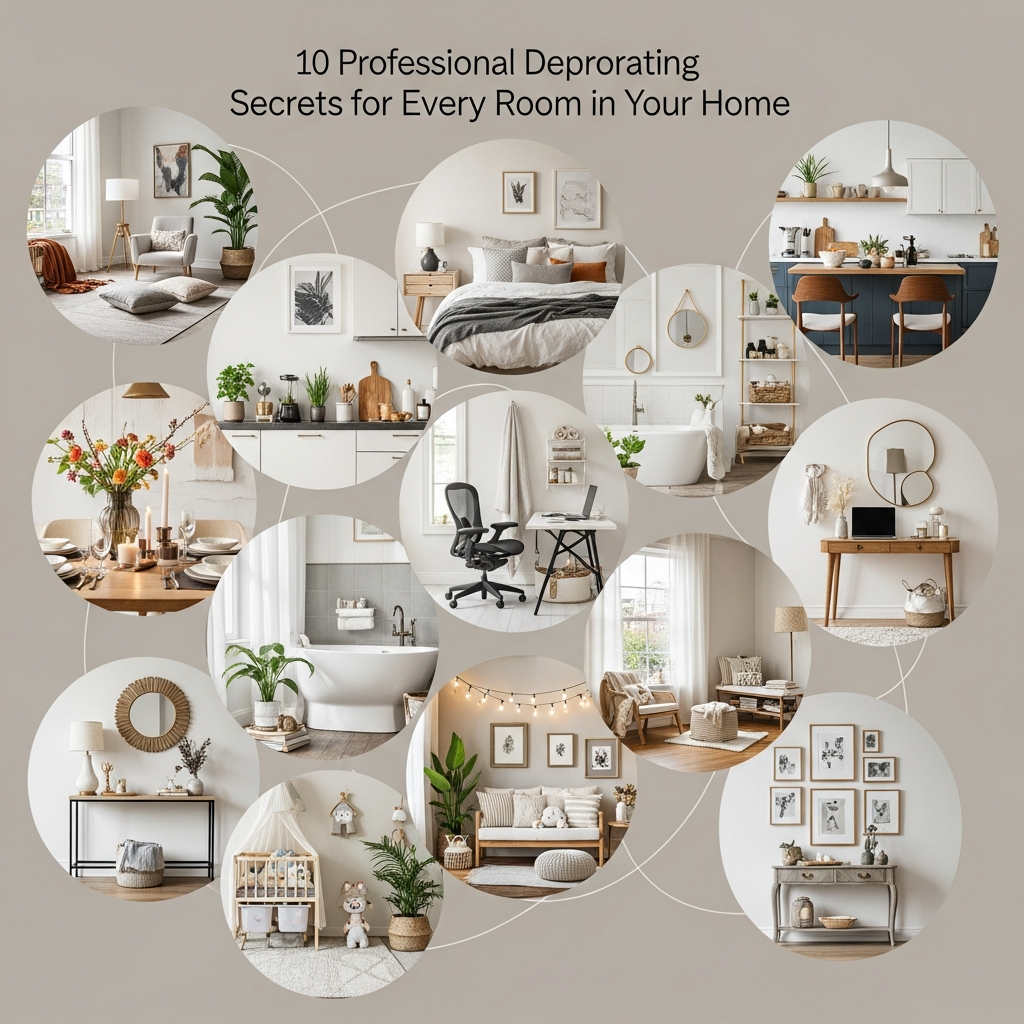
2. Layer Your Lighting for Mood and Function
Standard overhead lighting often makes a room feel flat and clinical. To achieve a professional ambiance, you must layer three types of lighting:
- Ambient Lighting: General illumination for overall visibility.
- Task Lighting: Focused light for specific activities like reading or cooking.
- Accent Lighting: Used to highlight architectural features or artwork.
3. The Power of Three
In the world of styling, odd numbers are more appealing to the human eye. Grouping objects in threes creates a sense of balance and visual interest. When decorating a coffee table or a mantel, try grouping items of varying heights and textures to create a dynamic vignette.
4. Hang Curtains High and Wide
One common mistake homeowners make is hanging curtain rods directly above the window frame. To make your ceilings feel taller and your windows larger, mount the rod 4 to 6 inches above the window frame and extend it 6 to 12 inches beyond the sides. This allows the full window to be seen even when curtains are open.
5. Invest in Proper Rug Scaling
A rug that is too small can make an entire room feel disjointed. In a living room, ensure that at least the front legs of all furniture pieces are resting on the rug. In a dining room, the rug should be large enough to accommodate the chairs even when they are pulled out from the table.
6. Embrace Negative Space
Professional designers know that what you leave out is just as important as what you put in. Negative space, or the empty area around objects, allows the eye to rest and prevents a room from feeling claustrophobic. Avoid the temptation to fill every corner; let your statement pieces breathe.
7. Mix Textures for Depth
A monochromatic room can look sophisticated, but without varied textures, it may feel cold. Combine different materials such as velvet, wood, metal, and woven fabrics. This contrast adds physical and visual warmth, making the space feel curated over time rather than bought from a single showroom.
8. Use Mirrors to Expand Small Areas
Mirrors are the oldest trick in the designer’s handbook for a reason. They reflect light and create the illusion of depth. Placing a large mirror opposite a window can double the amount of natural light in a room and make small hallways feel significantly more expansive.
9. Prioritize Traffic Flow
A beautiful room is useless if it is difficult to navigate. Always maintain clear pathways of at least 30 to 36 inches for high-traffic areas. Arrange furniture to encourage conversation while ensuring that nobody has to squeeze past a table or sofa to get to the other side of the room.
10. Curate Your Personal Story
The final secret to a professional-looking home is personalization. Avoid "fast decor" that lacks meaning. Instead, display items that tell your story—travel souvenirs, family heirlooms, or local art. When these items are styled correctly using the rules of scale and grouping, they transform a house into a home.
Frequently Asked Questions (FAQ)
How do I choose the right focal point for a room?
A focal point is the first thing your eyes land on when you enter a room. It could be an architectural feature like a fireplace, a large window with a view, or a bold piece of art. If the room lacks one, create it with a statement piece of furniture or a gallery wall.
Can I mix different wood tones?
Yes, mixing wood tones adds character. The key is to identify the "undertone" (warm, cool, or neutral) of your primary piece and ensure that other wood elements complement that undertone.
What is the most common decorating mistake?
Pushing all furniture against the walls is a frequent error. "Floating" furniture—pulling it away from the walls—creates a more intimate and professional layout.
Conclusion
Transforming your home does not require an unlimited budget; it requires a strategic approach to design. By mastering color proportions, layering lighting, and respecting the scale of your furniture, you can create a space that is both aesthetically pleasing and highly functional. Remember that great design is a process of curation and refinement. Start with one room, apply these professional secrets, and watch as your living space evolves into a sanctuary that reflects your unique style and professional standards.


Komentar
Posting Komentar